

Engagement
Participation is more than showing up—it is having meaningful ways to contribute. Engagement involves asking questions, sharing ideas, taking initiative, and actively participating in the learning process. Students who feel confident contributing are better equipped to learn with and from others.
This area asks:
Do people have a reason to participate, a way into the work, and enough clarity, choice, and support to stay with it?
Why it matters
People may have valuable ideas and perspectives but hesitate to share them. When participation is uneven, teams often rely on a few individuals while others disengage. Supporting engagement helps students develop confidence, accountability, and a sense of ownership in the learning process.
You Might Notice
You might notice people:
- wait for others to lead discussions
- hesitate to share ideas
- have few ways to participate beyong being called upon
- defer decisions to teammates
- contribute unevenly to group work
In classrooms, this may show up when students are physically present but quiet, unsure, disconnected, or waiting for direction; especially with cohorts they have already learned who will lead.
Make it intentional.
Whatever approach you use, especially if using in a classroom, tell people why. Effective learning and teamwork depend on meaningful participation. Help students understand that contributing ideas, questions, perspectives, and strengths is part of learning how to work effectively with others.
You Might Already Be Doing This
Many instructors/leaders already support engagement through discussion protocols, participation structures, reflection activities, and multiple opportunities for contribution.
Consider:
How are participants invited to contribute ideas?
What structures support equitable participation?
What different ways can people participate and contribute?
Whose thinking might not be entering the conversation?
Have a resource or example to share? I’m building this framework as I learn with educators, leaders, and teams. If you have an idea, a question, or a tool that belongs here, I’d love to hear from you.
Quick Activities — 5–15 minute, ready-to-use experiences.
Discussion Protocols — structured ways to help people talk, listen, share, or participate.
Ongoing Practices — routines used repeatedly across several classes, meetings, or weeks.
Tools to Try
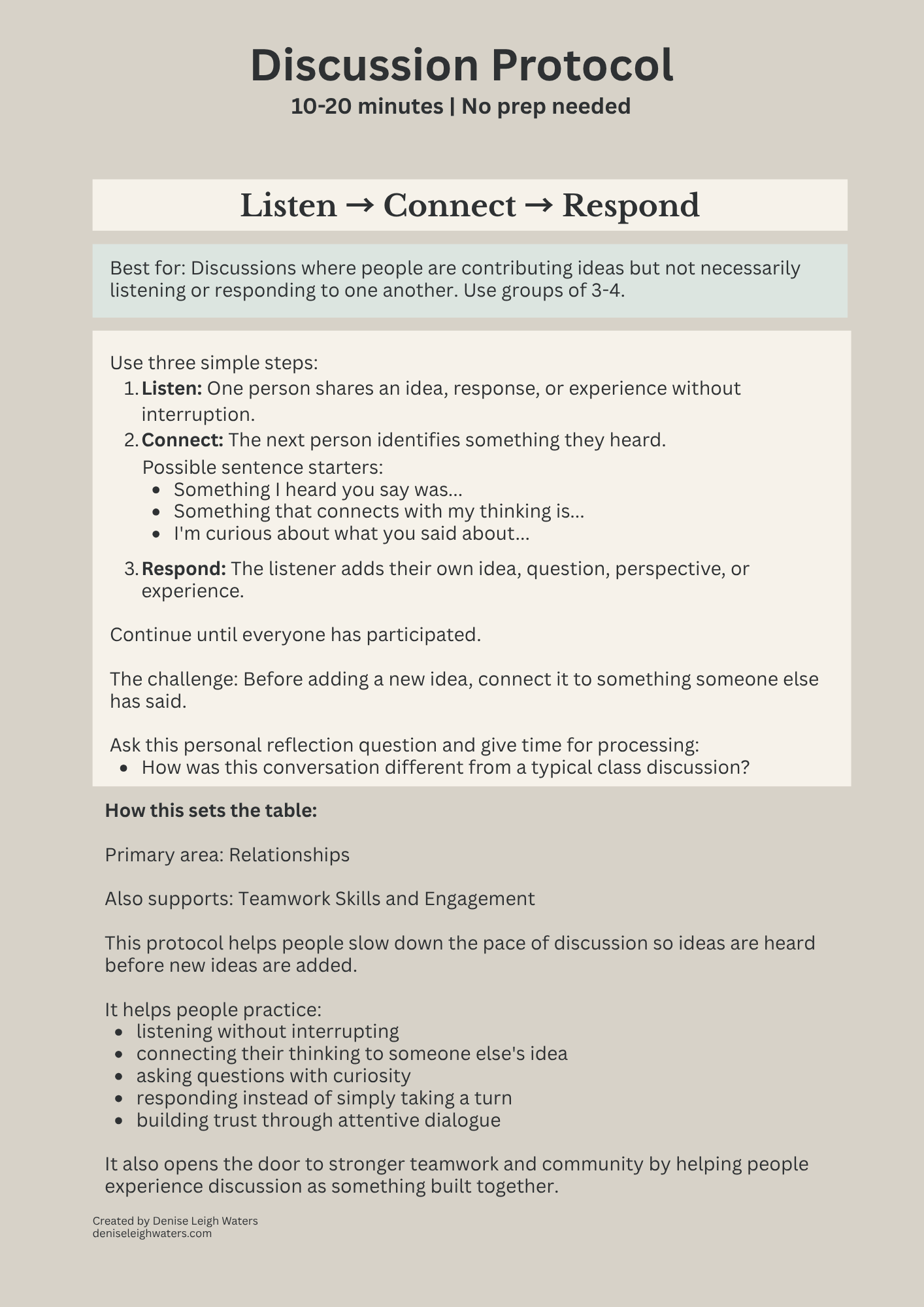
A structured discussion protocol for helping people listen, connect their thinking, and respond with intention instead of simply taking turns.
Best for: Groups where people are contributing ideas but not necessarily listening or responding to one another.
Builds: Relationships, with connections to teamwork skills and engagement.
Includes: Discussion protocol card.
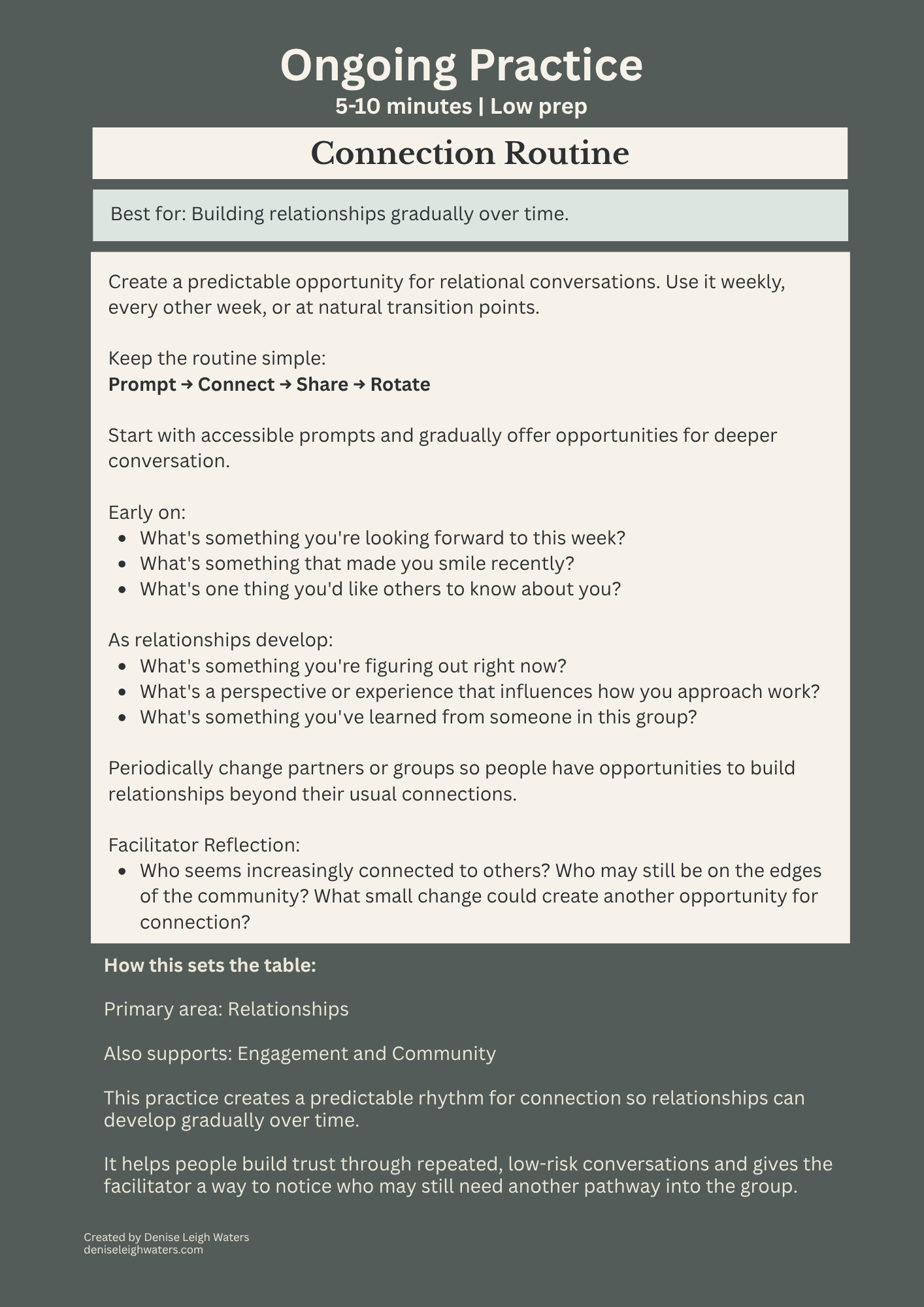
A simple ongoing practice for building connection gradually through repeated, low-risk relational conversations.
Best for: Groups that need regular opportunities to build trust, widen connection, and notice who may still be on the edges.
Builds: Relationships, with connections to engagement and community.
Includes: Ongoing practice card.
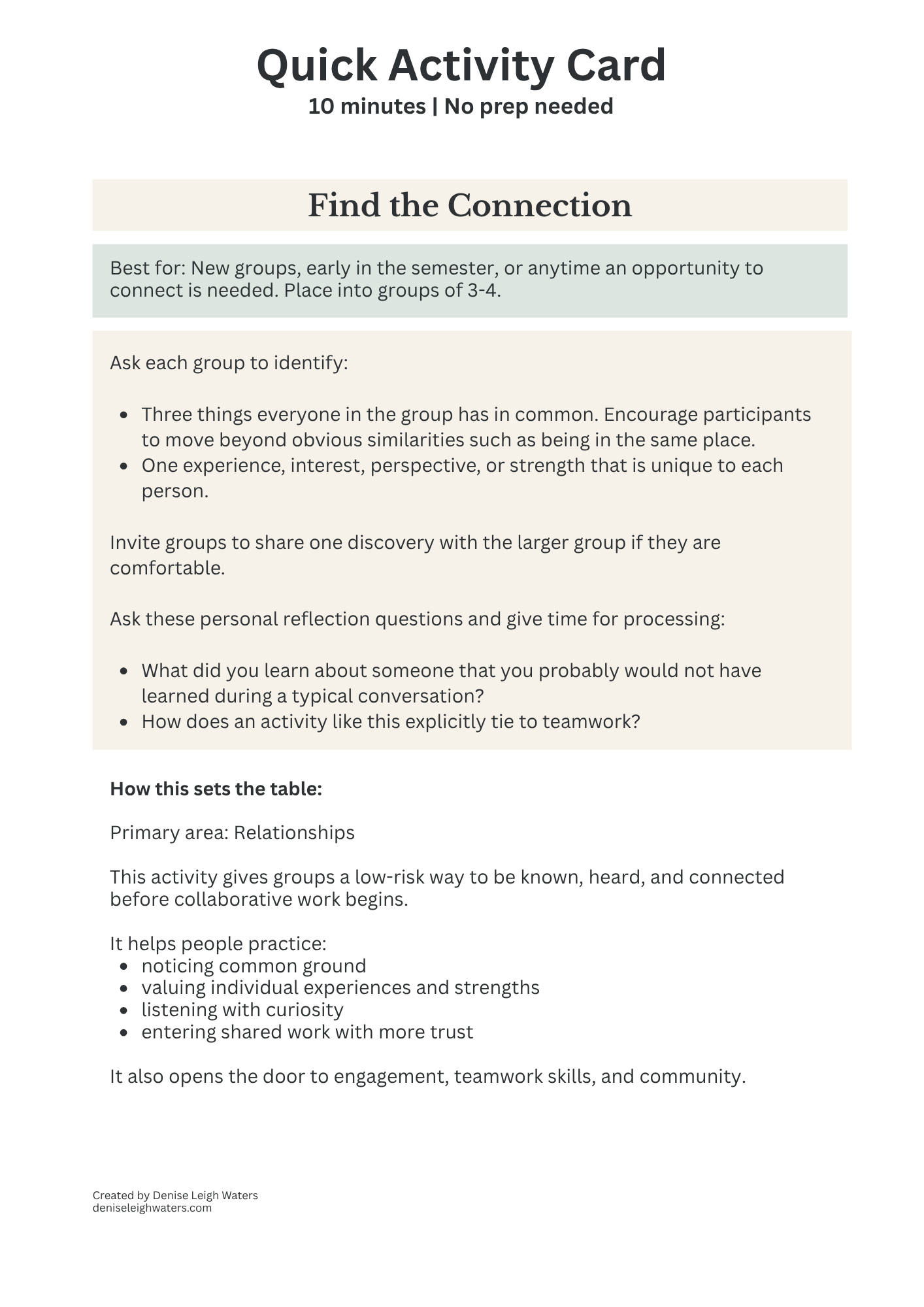
A quick activity for helping small groups discover shared connections and individual strengths before collaboration.
Best for: New groups, early meetings, or moments when people need a low-risk way to connect.
Builds: Relationships, with connections to engagement, teamwork skills, and community.
Includes: Quick activity card.
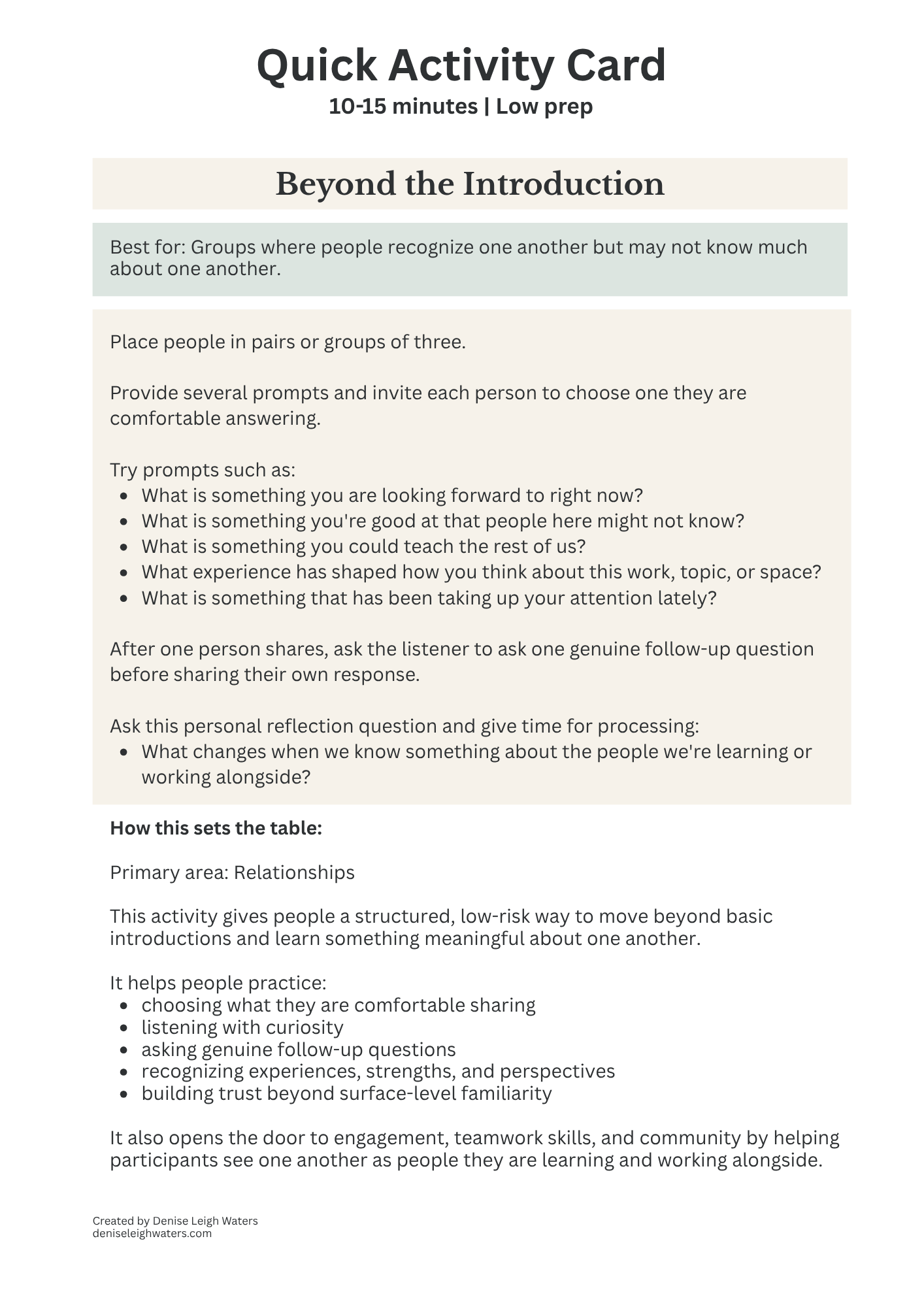
A quick activity for helping people move past surface-level familiarity and begin building real connection for teamwork.
Best for: Groups where people recognize one another but may not know much about one another yet.
Builds: Relationships, with connections to engagement, teamwork skills, and community.
Includes: Quick activity card.
Reflect & Check
After trying a strategy, reflect on what you noticed and check in with participants, too. What you learn can help you decide what to do next.
Ask yourself:
Did more people have meaningful opportunities to participate?
Whose ideas or perspectives entered the learning that I might not normally hear?
Who may still need another pathway to contribute?
What would I keep or adjust next time?
Optional participant check:
I have opportunities to participate and contribute my ideas in this class.
Consider using the same question again later to notice whether participants’ experiences change.
Then decide:
Keep it → Adjust it → Choose again.
Go Deeper
Want to explore relationship-building further? These resources offer additional ideas and tools.
Whole-Child Design | Supporting Student Agency
Explore ways to build student agency by leveraging students' strengths and intentionally creating opportunities for self-direction and active participation.
CASEL | Elevate Student Voice
Explore ways to broaden student voice, participation, leadership, and decision-making so more students experience their contributions as meaningful.
Next Education Workforce | Interest-Based Student Groups
Explore a planning protocol for using student voice and choice to create interest-based learning groups.
Use these resources when you want to understand the research and practices behind this area more deeply.
Have a question or resource to share?
Set the Table is still growing. If you have an idea, example, or tool that could help others build stronger relationships before shared work begins, I’d love to hear from you.