

relationships
Meaningful collaboration begins with connection. Relationships help people feel seen, supported, and comfortable working together.
This area asks:
Do people feel known enough, safe enough, and connected enough to enter the work?
Why it matters
People are often expected to collaborate before they have developed the relationships that make collaboration possible. When connection is thin, people may stay quiet, work alone, avoid conflict, or rely only on those they already know. Relationship-building creates the trust and safety people need to participate honestly, take risks, ask for help, and stay in the work when it gets messy.
You Might Notice
You might notice people:
- hesitate to speak or share ideas
- work beside each other instead of with each other
- avoid asking for help
- defer to the same voices
- stay close to people they already know
- withdraw when the work becomes uncertain or uncomfortable
In classrooms, this may show up when students divide tasks quickly, avoid unfamiliar peers, or treat group work as something to get through rather than something to build together.
Make it intentional.
Whatever approach you use, especially if using in a classroom, tell people why. Building relationships isn't separate from learning or teamwork—trust and connection create a foundation for communicating, contributing, and working effectively with others.
You Might Already Be Doing This
Many instructors/leaders already support relationship-building through introductions, discussion protocols, collaborative activities, norm development, and informal conversations.
Consider:
How do students/participants currently get to know one another?
What opportunities exist for building trust before group work begins?
Which relationship-building practices are you already using?
Have a resource or example to share? I’m building this framework as I learn with educators, leaders, and teams. If you have an idea, a question, or a tool that belongs here, I’d love to hear from you.
Quick Activities — 5–15 minute, ready-to-use experiences.
Discussion Protocols — structured ways to help people talk, listen, share, or participate.
Ongoing Practices — routines used repeatedly across several classes, meetings, or weeks.
Tools to Try
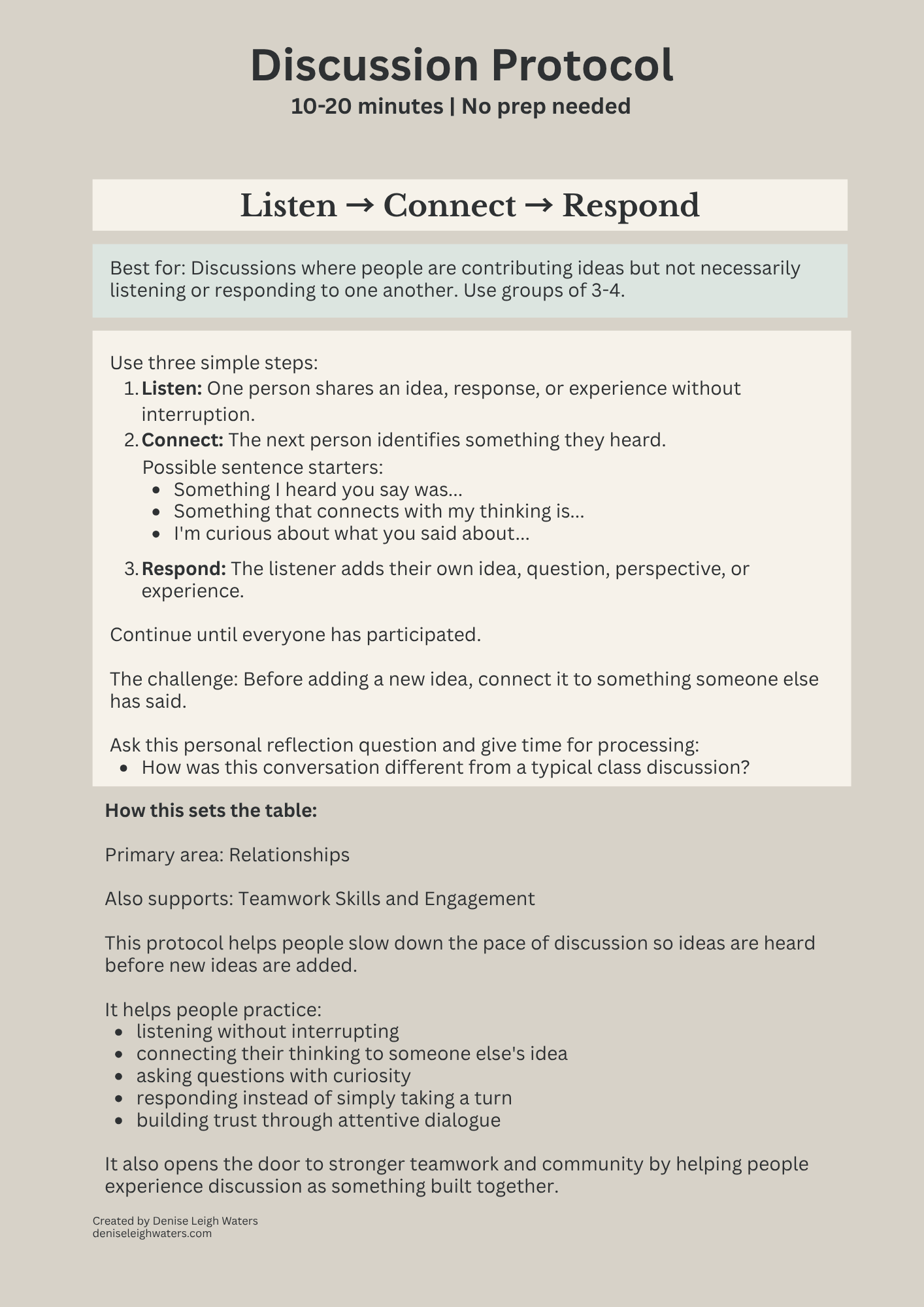
A structured discussion protocol for helping people listen, connect their thinking, and respond with intention instead of simply taking turns.
Best for: Groups where people are contributing ideas but not necessarily listening or responding to one another.
Builds: Relationships, with connections to teamwork skills and engagement.
Includes: Discussion protocol card.
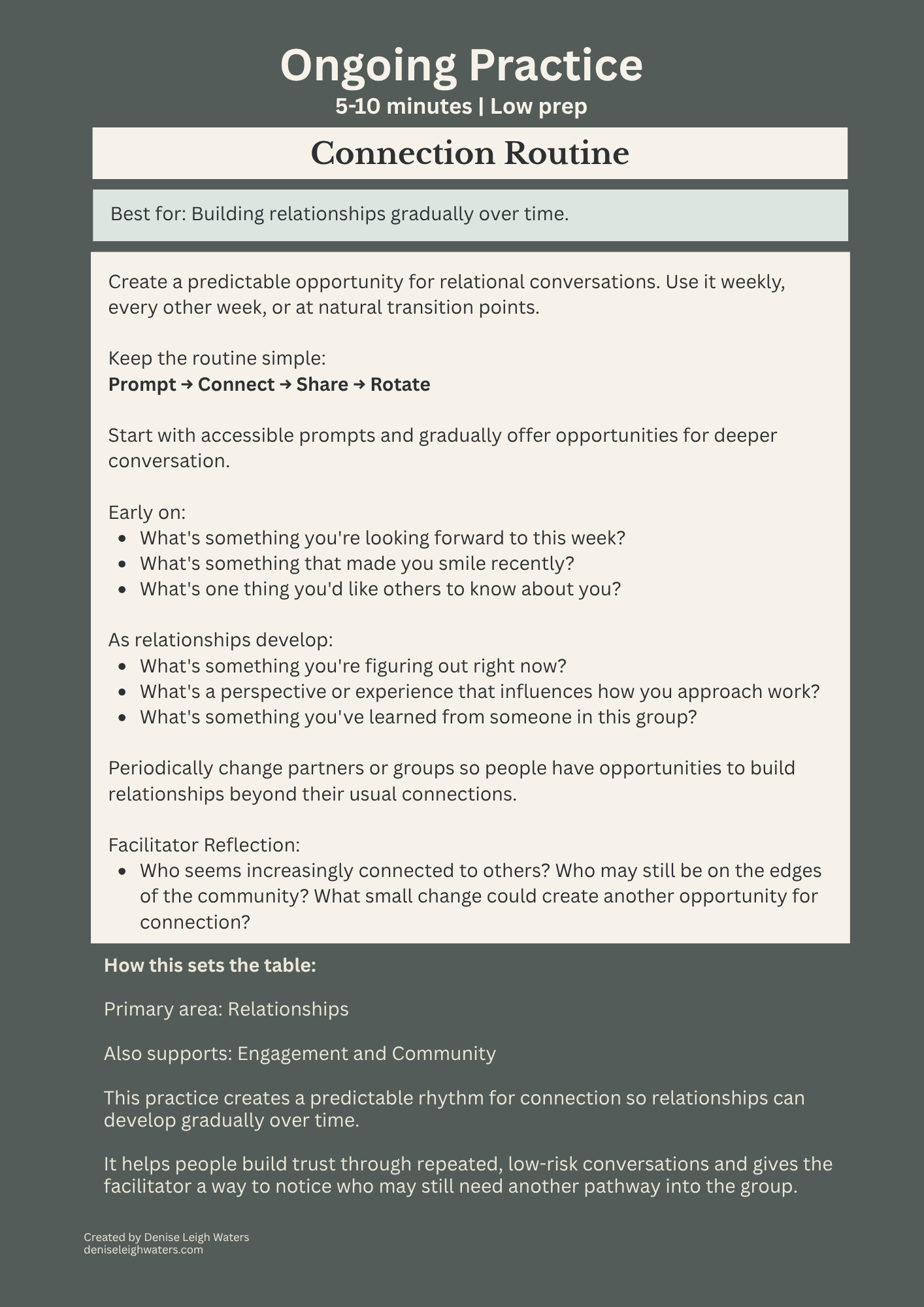
A simple ongoing practice for building connection gradually through repeated, low-risk relational conversations.
Best for: Groups that need regular opportunities to build trust, widen connection, and notice who may still be on the edges.
Builds: Relationships, with connections to engagement and community.
Includes: Ongoing practice card.
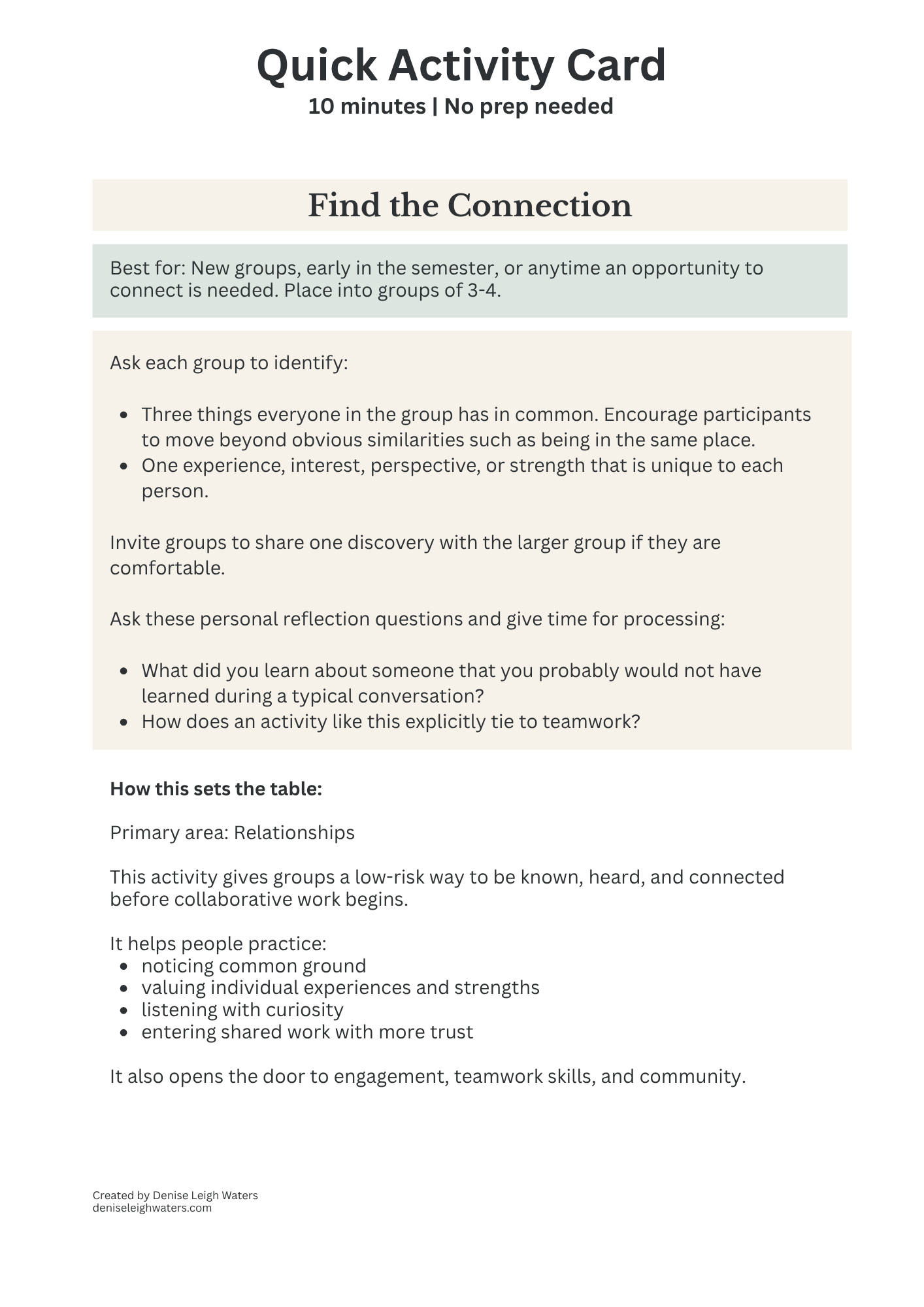
A quick activity for helping small groups discover shared connections and individual strengths before collaboration.
Best for: New groups, early meetings, or moments when people need a low-risk way to connect.
Builds: Relationships, with connections to engagement, teamwork skills, and community.
Includes: Quick activity card.
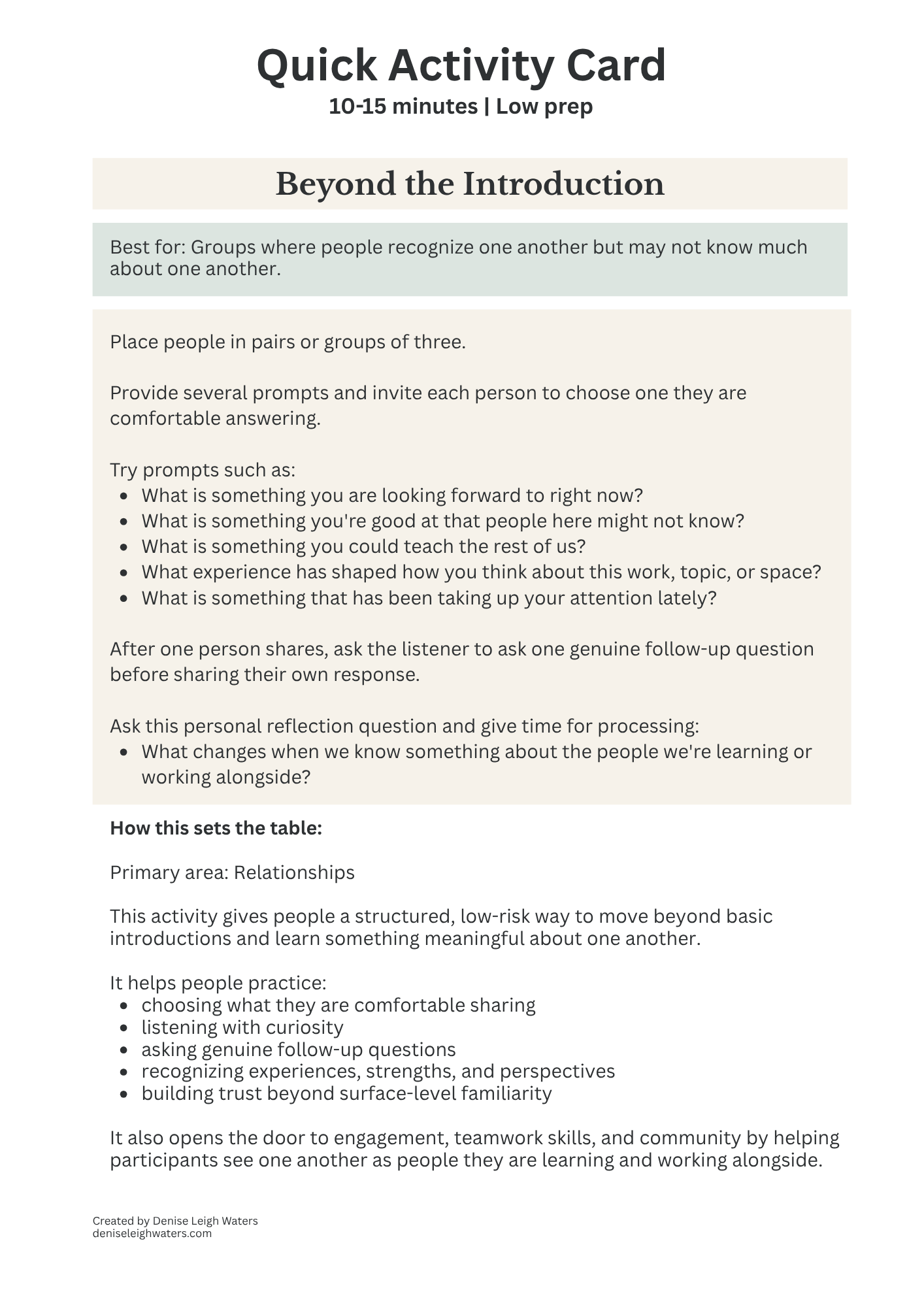
A quick activity for helping people move past surface-level familiarity and begin building real connection for teamwork.
Best for: Groups where people recognize one another but may not know much about one another yet.
Builds: Relationships, with connections to engagement, teamwork skills, and community.
Includes: Quick activity card.
Reflect & Check
After trying a strategy, reflect on what you noticed and check in with participants, too. What you learn can help you decide what to do next.
Ask yourself:
Did this create new or deeper connections?
Who seemed to connect easily? Who may still need another pathway in?
What might I repeat, change, or try next?
Optional participant check:
I have opportunities to build meaningful connections with others.
Consider using the same question again later to notice whether participants’ experiences change.
Then decide:
Keep it → Adjust it → Choose again.
Go Deeper
Want to explore relationship-building further? These resources offer additional ideas and tools.
Whole-Child Design | Student Relationship Structures
Explore how intentional structures create time and space for relationships among students and adults to flourish.
Principled Innovation | Listening for Understanding
Practice active listening and perspective taking to help others feel valued, heard, and understood.
CASEL | Belonging and Emotional Safety
Explore how trusting relationships and responsive classroom practices create conditions for belonging and emotional safety.
Use these resources when you want to understand the research and practices behind this area more deeply.
Have a question or resource to share?
Set the Table is still growing. If you have an idea, example, or tool that could help others build stronger relationships before shared work begins, I’d love to hear from you.