

foundations
How do we build the trust, teamwork, and belonging that help people thrive?
I keep coming back to this question—in my research, my teaching, my writing, and the way I think about relationships.
I don’t think connection happens by accident. And I don’t think some people are simply good at it while the rest of us aren’t.
We can learn to do this better.
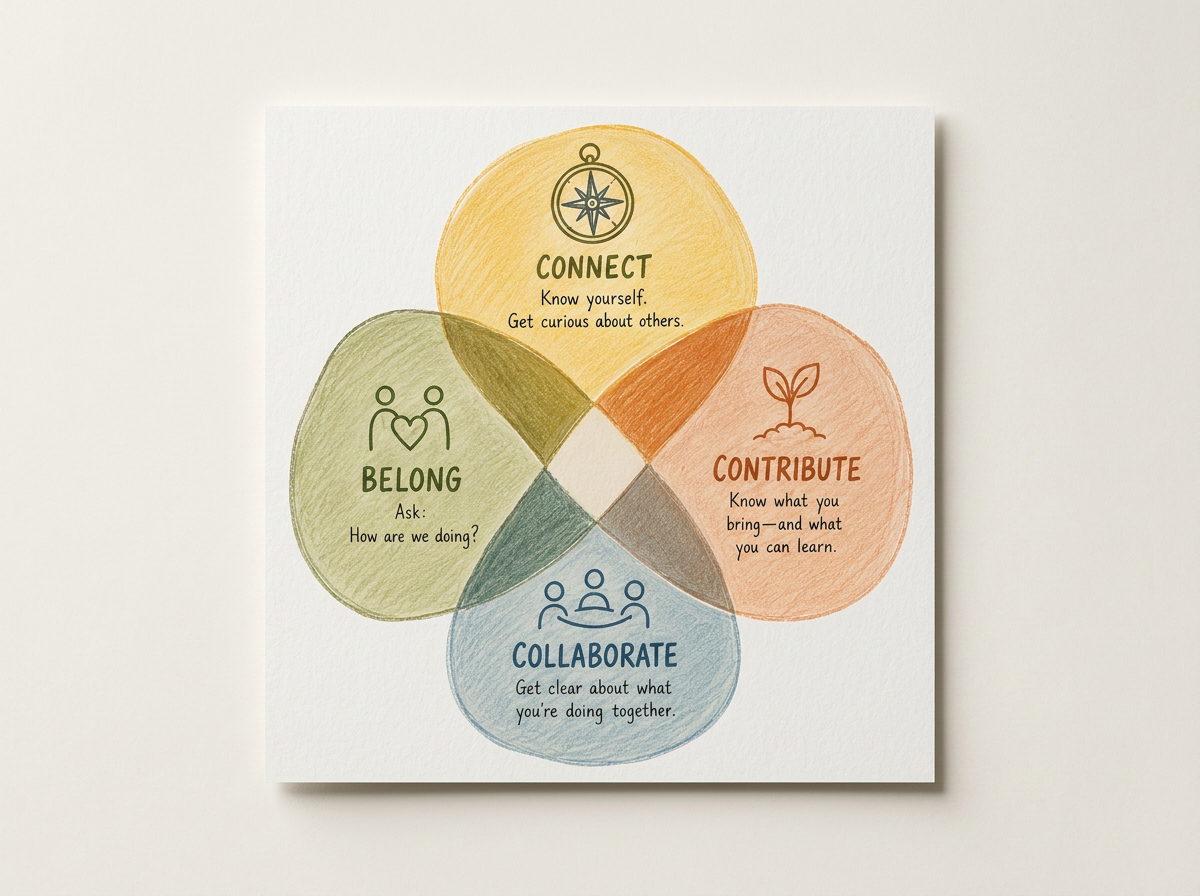
Connect. Contribute. Collaborate. Belong.
They aren't separate steps. Each shapes the others, and we move among them as our relationships, needs, and circumstances change.
Move beyond knowing who is in the room. Build Relationships.
Whenever we try to accomplish something with other people, we bring our own histories, preferences, strengths, stressors, and assumptions with us. Connection helps make the people in the room more visible to one another.
Before asking people to work together, it helps to create a low-risk way for them to learn something meaningful about one another.
Try asking:
What is something you are looking forward to right now?
What is something you're good at that people here might not know?
What is something you could teach the rest of us?
What experience has shaped how you think about this work, topic, or space?
What is something that has been taking up your attention lately?
A little connection before the work begins can make collaboration feel more human.
Connect.
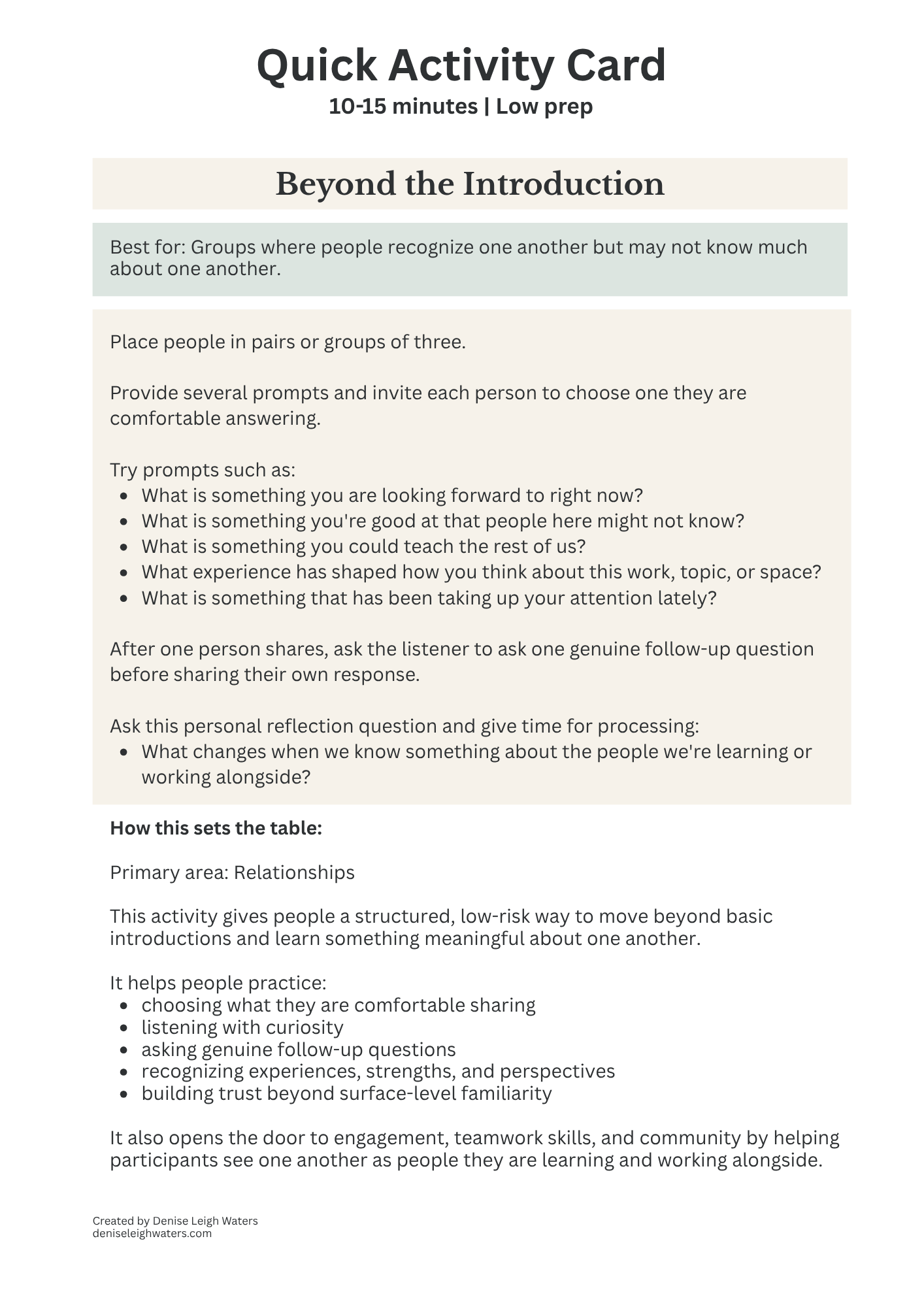
Beyond the Introduction
A quick activity for helping people move past surface-level familiarity and begin building real connection.
Best for groups where people recognize one another but may not know much about one another yet.
Pull up a chair.
Set the Table is growing into a practical framework for leaders, professors, and teachers who want to help people work together with more connection, clarity, and care.
If that sounds like work you’re doing too, I’d love to hear from you as I continue building the research and tools.
Contribute.
Know what you bring—and what you can learn. Engage with people and the work.
We bring strengths and skills into the things we do together, and we also bring different levels of experience, confidence, energy, stress, and capacity.
What you're good at isn't necessarily what you should always do. And what you don't know how to do isn't necessarily something you can't learn.
Ask yourself:
What can I offer here?
What do I have capacity for?
What might I need to learn?
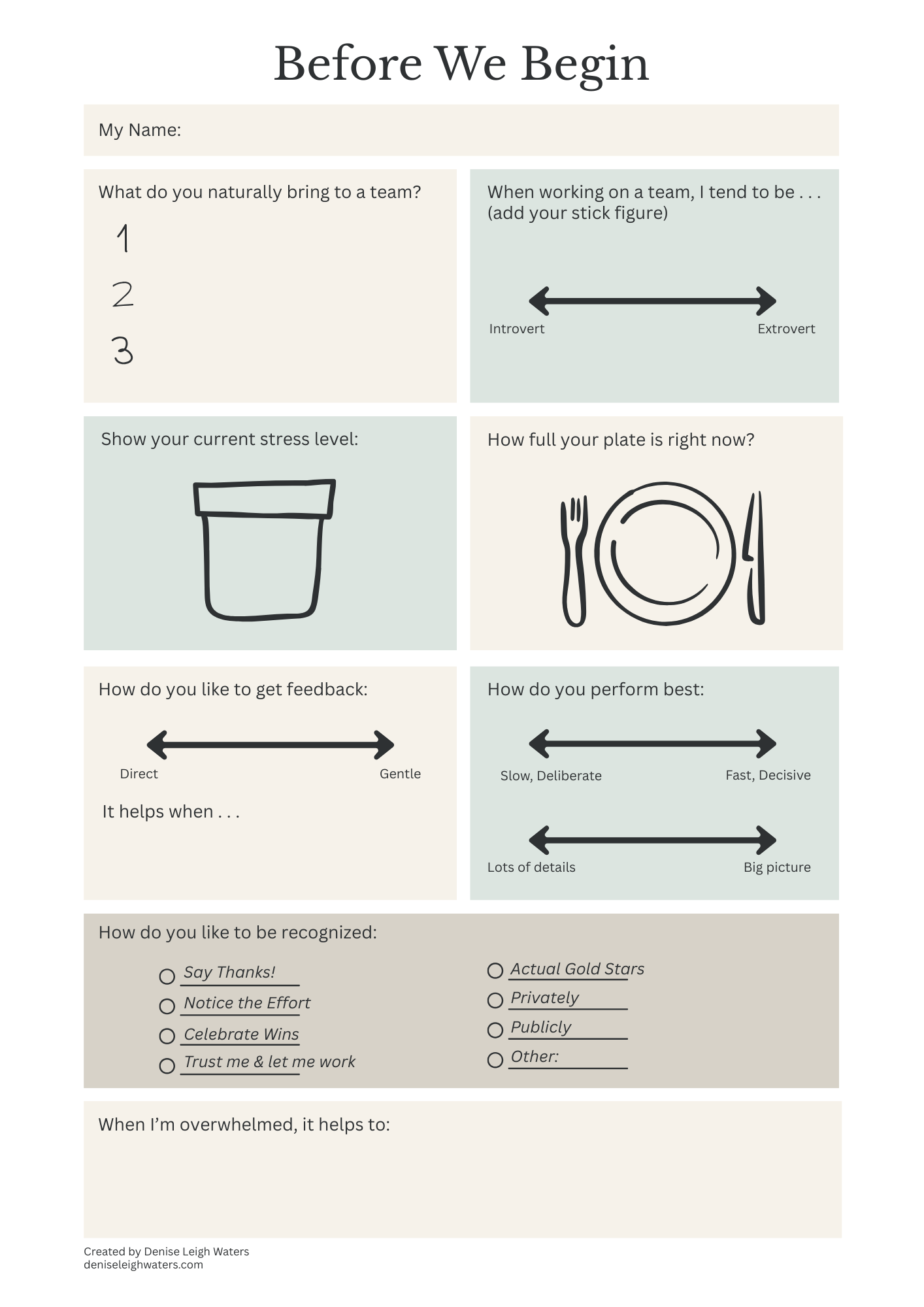
Before We Begin
Before deciding who will do what, take a minute to understand who's here.
This one-page reflection makes some of the things we don't always say out loud visible—strengths, stress, capacity, working preferences, feedback, and what helps us when we're overwhelmed.
Get clear about what you’re doing together. Build your Teamwork Skills.
Whenever we try to accomplish something with other people—at work, at home, or somewhere in between—we bring our own assumptions about what we're doing and how it should go.
Before jumping in, it helps to make those assumptions visible.
Ask together:
What are we actually trying to do?
What does good look like?
Who needs to be involved?
What has already been decided?
Where do we have room to choose?
A little clarity before we begin can prevent a lot of conflict once we're underway.
Collaborate.
A tool for the moments when you're about to do something together—start a project, plan an event, take a trip, make a big decision, or tackle something at home.
Sometimes the best time to talk about how you'll do something together is before you're in the middle of doing it.
Belong.
Ask: How are we doing? Consider the Community.
Relationships change. Teams change. We change.
What felt good at the beginning may not feel the same now. Our needs shift. Our capacity changes. What we're giving—and what we need from one another—changes, too.
We don't have to wait until something is wrong to check in.
Ask yourself—and each other:
What am I giving?
What am I receiving?
What do I need more or less of?
What might you need from me?
Is there something we need to say, ask for, or change?
Belonging is something we tend.
A simple reflection for checking in on a relationship, team, family, or partnership—not only when something feels wrong, but regularly along the way.
Reflect on your own first. Then come together to notice what's working, name what you need, and decide if anything needs to change.
Ready to Set the Table?
Set the Table turns research into practical tools for helping people gather well before the work gets hard.
It is for leaders, professors, and teachers who want groups to do more than sit together. It helps create the conditions for people to connect, contribute, collaborate, and belong as they prepare for the work and life they are building together.
Where do you want to go next?
These ideas travel.
Connection, contribution, collaboration, and belonging show up everywhere—in our work, our families, our friendships, our classrooms, and the communities we build.
Explore the ideas and keep wandering.